
It’s spring, or almost spring, for most of us in the United States. I’m looking at the calendar, attempting to block out the next week when I can take the wife and the Airstream to see more of this country. When I have the week planned, it’s time to schedule “prep time” for the camper and truck. While setting up an Airstream is far less complicated than getting paving equipment ready to roll, connected to its digital platforms, and understanding how each machine’s data can inform operational decisions, I can’t help but notice the similarities as I talk with contractors.
You don’t just pull onto the highway with your home-on-wheels and push play on Willie Nelson’s “On the Road Again.” No, it’s actually a multistep, agile process before the always-hard-to-schedule travel week, so that trailer won’t wobble as the odometer miles go up.
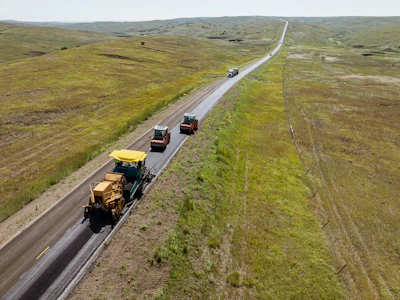
Building a data-driven paving train with equipment and technology is the same way: first, inspect the equipment before getting the machine ready to connect, level the machine data collection process, evaluate performance after a few passes and adjust. Then, turn the ignition and start all over again.
“Most contractors today aren’t struggling because they lack demand — they’re struggling because they’re trying to deliver more miles of road with fewer people and tighter schedules,” said Craig Lamarque, vice president of digital products at Wirtgen America. “That’s why digital planning and connected workflows matter just as much as what’s happening on the machine itself.”
Let’s consider steps paving crews can take to follow the now-proven, data-driven playbook for smooth, long-lasting roads.
Step 1: Hitch the Paving Train to the Operations Center
Before machine control, sensors and fleet software systems, paving crews had to rely on those who had spent years on the road. Now, with today’s equipment and technology solutions, crews can finish the road with fewer do-overs and precise documentation — documentation that can be used at the end of the project during reports to Department of Transportation (DOT) officials.
“When crews connect machines early, they’re not just capturing data for later — they’re creating alignment before the first pass,” Lamarque said. “Everyone knows what success looks like before steel ever touches the surface.”
Ensure consistent and quality data by connecting your mill, compactor and paver. For mixed fleets, having a centralized system for data collection for planning, monitoring and maintenance helps contractors create “better data” to prevent blind spots in fleet monitoring.
“Paving crews we’ve partnered with say their machine data is at its best when it can be used to influence operational decisions over the course of a project,” said Cody Wagner, paving technology product manager at RDO Equipment Co. “Be it knowing aggregate sizes in mixture, the asphalt binder in mix, what the previous day’s density results are — these are basic data points that could help spot quality issues as they happen.”
Step 2: Track and Store Data from Each Machine in the Train
Built to measure, automate and document, a digital platform can record machine data sets including:
- Amount of materials moved
- Fuel burn
- Material temps
- Machine health
- Paver output
- Production hours
- Roller passes
- Water usage and more
“The value of machine data isn’t how much you collect — it’s how quickly crews can act on it,” Lamarque said. “If something starts drifting off target, you want to know while the paving train is moving, not after the job is over.”
When the paving train is moving, a fleet manager can view machine data dashboards from the office and help fleet managers spot bottlenecks before they happen.
“Paving crews can even lean on remote support teams to consolidate dashboards to monitor each machine’s utilization and fuel usage,” Wagner said.
Some pavers and rollers include integrated setup assistance for a fleet management system and automatic data sharing with the owner so fleet managers and operators can see real-time information. Some asphalt pavers include setup assistance, adjustable material flow and digital documentation tools to help operators achieve mat targets even when schedules are tight. Some rollers can deliver continuous, real‑time density guidance and automate compaction energy — the quickest route to spec without over‑rolling.
Step 3: Calculate Each Machine’s Average Production
In using a digital platform, consider each machine in the paving train’s output. Then use certain applications in the platform to look ahead.
- Milling — Capture depth, output, fuel and tool changes through WPT/Mill Assist to forecast haul and plant needs accurately.
- Paving — Log speed, layer thickness, screed settings and temperatures — especially helpful for night work or thin lifts.
- Compaction — Map passes and density in real time so the foreman can call the pattern before you burn hours chasing stubborn spots.
“When production planning, machine control and documentation all live in the same platform, it dramatically reduces rework,” Lamarque said. “Crews spend less time reacting and more time running the plan.”
Plus fleet managers can work with a support team to create 3D models or schedule parts and service so the require paving machines in the train won’t miss a pass during key production times.
Step 4. Use the Hub to Compress Timelines and Reduce Rework
Digital platforms can be used as a project management tool to plan paver crews’ schedules in the upcoming weeks. Here are two ways paving crews can use such a platform:
- Machine health — Integrated maintenance plans and alerts, so managers can pre-plan service instead of only acting after a breakdown backs up traffic.
- End‑of‑job reporting — Pull documented production, idle time and emissions to get paid faster and defend your work.
With this info, the fleet manager can adjust the plant’s rate of asphalt production or concrete mix or increase the speed of material delivery machines. They may also add crew members if they need more operators or surveyors.
Step 5: Test, Measure and Monitor the Next Pass
Top crews use the data from the last roadbuilding project to inform their next bid. With machine data unified in one place, a fleet manager can start to benchmark shift-to-shift and operator‑to‑operator: how quickly they reached target density, where temperature control slipped, how many minutes the paver idled and which roller pattern won the night.
Together, machine data with machine control solutions like road-scanning systems to deliver real-time info to the digital platform to create a semi-autonomous paving train.
“Semi‑autonomous doesn’t mean hands off,” Lamarque said. “It means operators stay in control while the technology helps guide setup, maintain consistency and document every step of the process.”
Semi‑autonomous paving combines instrumented pavers and intelligent rollers guided by real‑time data and automation:
- Some pavers are equipped with automated material feed. Some rollers with smart technologies can automate compaction energy based on continuous density feedback and location that reduce the likelihood of over or under compaction.
- A digital platform centralizes telematics, job progress, service planning and end‑of‑job reporting for fleets including many colors of iron.
Together, these systems create the backbone of semi‑autonomous paving technology — operators remain in control, but the machines guide setup, maintain consistency and document every step, which is how you keep speed without sacrificing spec.
Why This Matters to Your Schedule and Budget
Lamarque explains if the entire crew treats data like another part of the team to help make decisions, their entire paving train will run smoother.
- Fewer surprises — Real‑time visibility across the train cuts reaction time from hours to minutes.
- Less rework — Automated compaction and documented temperatures keep you on spec the first time.
- Higher utilization — Integrated maintenance planning helps you conduct maintenance and repairs during expected downtime instead of after a breakdown.
- Right‑sized fleet — Paver and roller rentals let you surge for deadlines without carrying iron you don’t need in the off‑season.
If you want to finish projects quickly and efficiently, stabilize your digital campsite before pulling the paving train onto the highway. Connect your paving technology — asphalt pavers, intelligent rollers and other machines — into a digital platform. We’re all eager to feel the air stream across our faces as we are building the open run everyone enjoys during the annual summer road trip. But we’ll be able to make quick, well-informed decisions, document densities and confidently hand the keys off when we complete these five steps to create a semi-autonomous paving train.
We will see you on the road.