As fleets grow larger and become more geographically dispersed, inspection capacity is becoming one of the industry’s biggest operational challenges. At the same time, experienced inspectors are in increasingly short supply, leaving fewer specialists available to meet growing inspection demands.
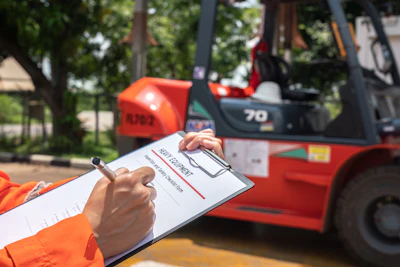
For decades, equipment inspections have always involved an inspector travelling to a machine to complete the necessary paperwork. Once they reach the site, often after a long day of travel, they assess its condition, complete the necessary documentation and then repeat the process at the next site. As fleets are becoming larger and assets are spread across multiple locations, experienced inspectors are expected to cover wider territories. The traditional approach is becoming more and more difficult to sustain.
Compact Equipment Often Feels the Impact First
While the challenge affects equipment of every size, its impact is often most evident in the compact equipment sector. Compact machines typically move between customers more frequently than larger assets, increasing the volume of inspections required through their lifecycle. As utilisation rates rise too, so too does the administrative and logistical burden of scheduling experienced inspectors, creating delays that can slow equipment turnaround and reduce fleet availability.
For rental businesses, where compact equipment is expected to return to service quickly between hires, even relatively small delays in the inspection process can have a noticeable impact on equipment availability and fleet utilisation. As inspection demands continue to grow, attention is shifting towards how inspector expertise can be deployed more effectively, reducing the travel and logistical constraints that have traditionally limited inspection capacity.
Can Expertise Travel?
In July 2026, Chris Buehn, an inspector working from a desk in Cambridge, England, completed three separate live equipment inspections across three continents — North America, Europe and Africa — in a single hour. Equipment dealers in Italy, South Africa and the U.S. each had a machine and local personnel on site, while the inspector directed every stage of the inspections remotely in real time. Reaching an audience of more than 800 industry professionals, the demonstration provided little opportunity to revisit missed observations or technical issues.
Even modest delays in completing administrative processes can affect utilisation and availability.
The key takeaway lay in how the inspection itself was conducted. The inspection process remained fundamentally unchanged. The inspector still directed the inspection, requested specific views, assessed component condition, asked follow-up questions where required and relied on his own professional judgement throughout. Local personnel acted as the inspector’s eyes and hands on site, but the expertise behind every decision remained exactly where it had always been- with the inspector. The only process that had been removed was the need to travel.
The demonstration also challenged the administration process. Traditionally, inspection reports are completed after the assessment has finished, creating additional work before findings can be shared or acted upon. During the live demonstration, however, the inspection report was populated as the assessment progressed. Images, video footage, observations and feedback were captured in real time, meaning each report was effectively complete by the time the inspection concluded.
For regional and independent rental businesses, those administrative efficiencies can be just as valuable as reducing travel. When a smaller fleet is waiting for an inspection to be completed and documented before equipment can return to service, even modest delays in completing administrative processes can affect utilisation and availability. By reducing the time between inspection, reporting and sign-off, assets can move through the process more quickly without changing the inspection itself.
While reducing administration offers obvious efficiency gains, the wider implication is how experienced inspectors spend their time. Traditionally, a significant proportion of an inspector's working day can be consumed by travelling between sites rather than carrying out inspections. With inspection capacity becoming increasingly constrained and workloads remaining high, removing the need to travel creates the opportunity to inspect more equipment within the same working day, without compromising the quality of the assessment or increasing pressure on experienced personnel.
The live demonstration also highlighted the value of remote inspections for assets that are difficult or costly to access. During the live discussion, Buehn highlighted the benefits of remote inspections, particularly for machines operating in remote locations. He pointed to politically unstable regions and areas affected by extreme weather, where travel can introduce significant delays, additional costs and safety risks. In these situations, remote inspections provide a practical way of maintaining inspection coverage when traditional site visits become increasingly difficult.
Challenging Long-Held Assumptions
The demonstration was never intended to suggest that every equipment inspection should be completed remotely. There are fault types, damage patterns and equipment categories where physical presence still matters, and understanding where remote inspections are most useful remains an important part of their successful adoption. What it did demonstrate, however, is that travel no longer has to define how inspection expertise is deployed.
Technology alone won’t solve the industry’s shortage of experienced inspectors.
Where the approach offers the greatest value is in routine and periodic inspections, the recurring assessments that keep compact and mid-size rental equipment moving between hires. For this category of work, reducing unnecessary travel enables experienced inspectors to assess more machines without changing the quality of the inspection itself. The same professional judgement is applied to more assets, with less time lost and wasted between assessments.
For decades, it has been accepted that inspection expertise and physical presence are inseparable. That model made sense when fleets were more geographically concentrated, and inspection volumes were lower. However, neither of those conditions holds true for most operators today.
One practical takeaway for rental businesses is to look closely at where inspection time is actually being spent:
- How much of your current inspection turnaround is genuinely devoted to the assessment itself?
- How much is consumed by travel and administrative processes?
For many businesses operating compact and mid-size rental equipment, that second category is often larger than expected.
Technology alone won’t solve the industry’s shortage of experienced inspectors, but what it can do is help existing expertise go significantly further. As the demonstration showed, reducing unnecessary travel and streamlining workflows allows inspectors to spend more of their time doing what only they can do: inspecting equipment.